




When Worry Takes Over: Understanding Anxiety, GAD and Panic Attacks
- Share This Story

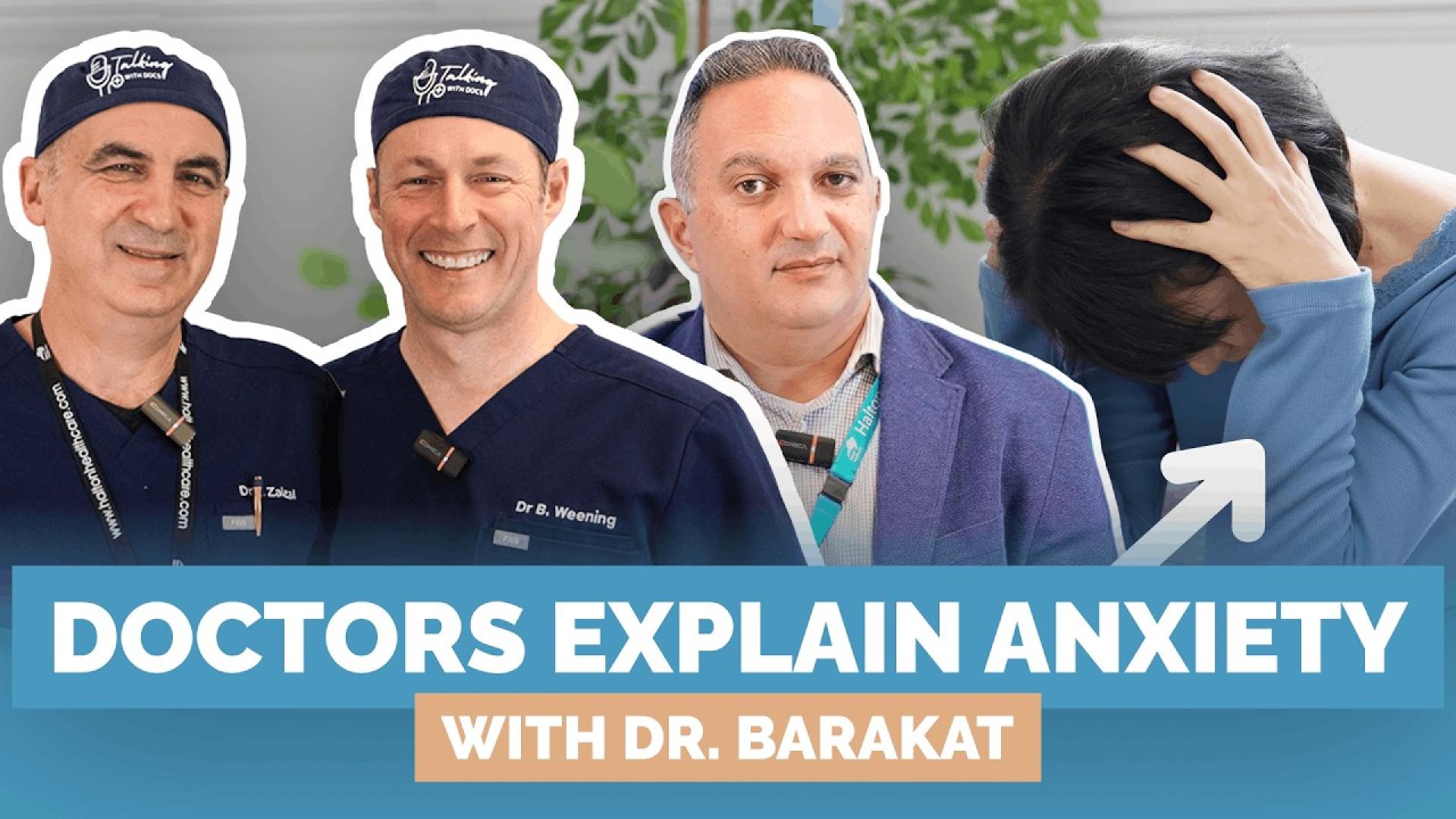
Anxiety becomes a clinical concern when it moves past a helpful stress response and starts to overwhelm daily life. Generalized Anxiety Disorder (GAD) brings ongoing worry about everything and anything. Panic Disorders brings recurring, unexpected panic attacks. In this episode of Talking With Docs, psychiatrist Dr. Barakat explains how the two differ, who they affect, and where to start if either sounds familiar.
When Is Anxiety Helpful, And When Is It A Disorder?
Anxiety is part of being human. Under stress, it can sharpen our focus and push us to prepare, finish and respond. Dr. Barakat describes clinical anxiety as the point where that response crosses a line. Instead of motivating us, it paralyzes and overwhelms us.
What Is Generalized Anxiety Disorder (GAD)?
GAD is worry that attaches itself to everything and anything. It can leave you restless, tense in your muscles and irritable, among other symptoms. Anxiety can also show up in the body, so what feels like a physical problem may have anxiety behind it.
GAD is also becoming more common. According to Dr. Barakat, it has doubled over the last ten years, and 13% of Canadians will experience GAD.
What Is A Panic Disorder?
Panic Disorders involve recurring, unexpected panic attacks. A panic attack arrives suddenly, often with strong physical symptoms such as a pounding heart, shortness of breath or chest tightness.
GAD vs. Panic Disorder: What Is The Difference?
| Generalized Anxiety Disorder (GAD) | Panic Disorder |
|
|
The clearest difference is timing. GAD can be almost constant and stay in the background of the day. Panic Disorders arrives without warning.
These symptoms become a disorder when they are accompanied by significant distress and functional impairment.

Who Experiences Anxiety?
More children and adolescents are experiencing anxiety. Dr. Barakat points to factors such as social media and growing up with a parent who lives with anxiety.
Adults are no exception. For some people, anxiety builds slowly over time. It can find us at any age, and many people meet it for the first time later in life.
Three Self-Help Tools To Try
- Breathing exercises: Slow, steady breaths give your body a signal to settle.
- Progressive muscle relaxation: Tense one muscle group at a time, then release it, and move through the body.
- Mindfulness and meditation: Bring your attention to the present moment, one breath or one sensation at a time.
Take The GAD-7 And Talk With Your Family Doctor
The GAD-7 is a seven-question survey that asks how often certain problems have bothered you over the last two weeks. The survey is a screening tool, and a diagnosis comes from a health professional who considers your whole picture.
If you think you may experience GAD or any other form of anxiety, bring your results to your family doctor.